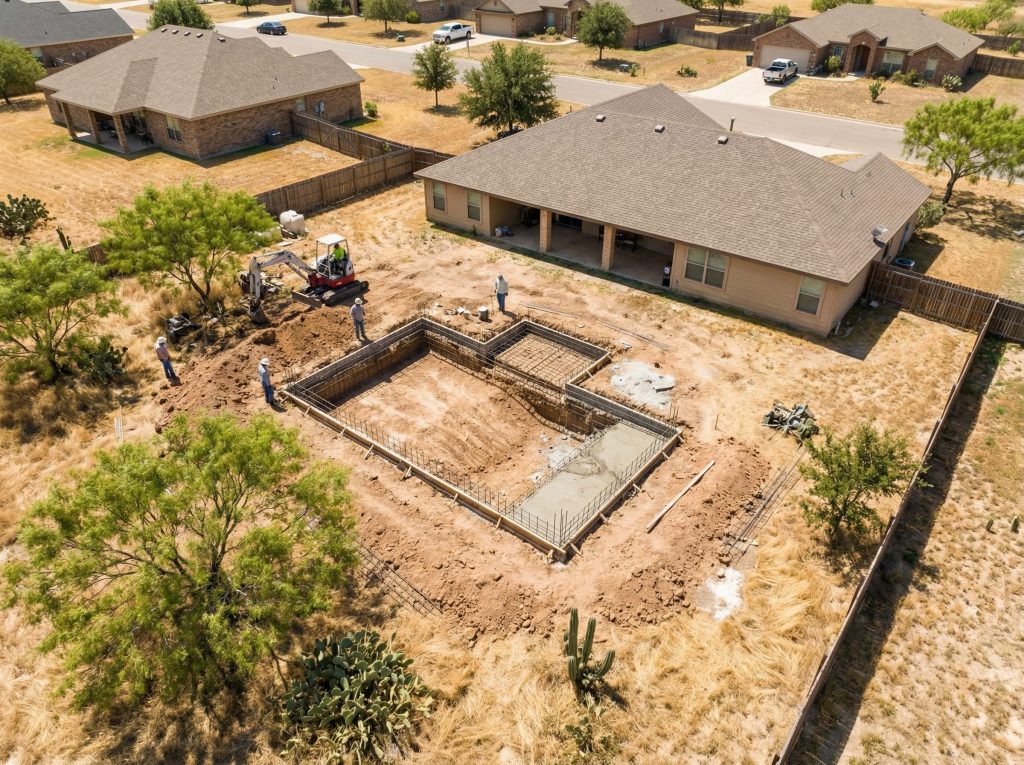
Thinking about putting in a pool? Good. Down here in the Valley, a backyard pool isn’t a luxury, it’s almost a survival tool once July hits and the heat index is pushing 110. But here’s the deal: hiring the wrong pool builder Rio Grande Valley homeowners trust can turn that dream backyard into a two year nightmare of leaks, cracked decking, and lawsuits. I’ve seen it happen more times than I care to count, from Brownsville all the way up to Mission. The good news? Most of the disasters are avoidable if you ask the right questions upfront. Before you hand anyone a deposit check, sit them down and run through these ten questions. How they answer will tell you everything you need to know.
Why Does Choosing the Right Pool Builder Matter So Much in the RGV?
Because the Valley is hard on pools. We’ve got expansive clay soil that swells and shrinks with every rain and dry spell, which puts constant pressure on pool shells. We’ve got brutal UV that fades plaster and eats pool equipment. We’ve got a rare freeze every few years (remember 2021?) that can destroy plumbing that wasn’t installed with freeze protection in mind. And we’ve got a mix of licensed pros and weekend warriors with a Bobcat who call themselves “pool builders.” A good builder knows all of this and builds for it. A bad one hands you a pretty rendering and hopes for the best. The cost spread tells the story too. A basic shotcrete pool in the RGV starts around $38,500, but a fully custom build with spa, decking, and features can run $80,000 to well over $150,000. That’s not a decision you make on a handshake.
1. Are You Licensed and Insured in Texas?
This is question number one for a reason. Here’s what most homeowners don’t realize: Texas doesn’t issue a single statewide “pool builder” license. What Texas does license, through the Texas Department of Licensing and Regulation, are the individual trades involved in building a pool: electricians, plumbers, and appliance installers for heaters. So when you ask a pool builder Rio Grande Valley homeowners should be verifying the licenses of the subs they’re using, not just the company name on the brochure. Ask for license numbers for their electrician and plumber, then verify them yourself at the TDLR license search tool. Takes about 30 seconds. If the builder hesitates or gets annoyed, walk away. Also ask for proof of general liability insurance and workers’ comp. Get a certificate emailed to you directly from their insurance carrier, not a PDF they send you themselves.
2. How Long Have You Been Building Pools in the Rio Grande Valley Specifically?
National experience is fine. Valley experience is better. Building a pool in expansive clay soil with Gulf humidity is not the same as building one in Arizona or Colorado. You want someone who knows what the caliche layer looks like two feet down in Edinburg, who’s dealt with the drainage quirks in older Harlingen neighborhoods, and who understands why freeze protection matters even in a region that only freezes once a decade. Ask how many pools they’ve built in the RGV in the last three years. Ask for three local references you can actually call. Then call them.
3. Can I See Three Pools You Built at Least Five Years Ago?
Anyone can build a pool that looks great on day one. The real test is what it looks like five years later. Ask to see older builds, not just the shiny new stuff on their Instagram. When you visit or call those references, ask about cracking, plaster staining, equipment failures, and how the builder handled warranty issues. This one question separates the real builders from the flippers. A proud builder will have a list of older happy customers ready to go. A sketchy one will suddenly get vague.
4. What’s Included in the Base Price and What’s Extra?
This is where most people get burned. A quote that says “$45,000 for a 14×28 pool” sounds great until you find out decking, coping, plaster upgrades, lighting, the electrical panel upgrade, permits, fencing, and cleanup are all extras. By the time you’re done, you’re at $75,000 and pissed off. Get an itemized written quote. Every single line item. Ask specifically about excavation and dirt haul off (in the Valley, that can run $2,000 to $6,000 on its own depending on soil), permits, electrical work, gas lines if you’re adding a heater, and startup chemicals. If they won’t itemize, that’s a red flag.
5. What Kind of Pool Shell Do You Build and Why?
In the Valley you’ll mostly see three options: gunite or shotcrete (sprayed concrete), fiberglass shells, and occasionally vinyl liner pools. Each has tradeoffs. Shotcrete is fully customizable and holds up well in our soil if it’s engineered right, but it costs more and takes longer. Fiberglass is faster to install and easier to maintain, but you’re limited to prefab shapes and sizes. Vinyl is cheapest upfront but the liners fail sooner, especially with Valley UV. A good pool builder Rio Grande Valley customers can trust will walk you through all three honestly and explain which fits your budget, soil, and lifestyle. If they only push one option without explaining why, they’re selling, not advising.
6. How Are You Handling Our Soil Conditions?
This is the question most homeowners never think to ask, and it’s one of the most important. Valley clay soil moves. A lot. If your builder isn’t accounting for that with proper steel reinforcement, adequate shell thickness, and good drainage around the pool, you’re going to see cracks within a few years. Ask specifically: “What rebar schedule are you using?” “Are you doing a soil test before excavation?” “How are you handling drainage on the uphill side?” You don’t need to be an engineer to ask these questions. You just need to see whether the builder takes them seriously. The Texas A&M AgriLife Extension has solid publications on Valley soils if you want to read up beforehand.
7. What’s the Realistic Timeline From Contract to First Swim?
A typical Valley pool build runs 10 to 16 weeks from the day the crew breaks ground, assuming no weather delays and no permit holdups. Add another two to four weeks on the front end for design, permits, and HOA approval if that applies to you. Anyone promising you a pool in six weeks is either lying or cutting corners. Anyone vague about timelines (“depends on a lot of things”) is either disorganized or setting you up to be surprised. Ask for a written schedule with major milestones: excavation, steel and plumbing rough in, shotcrete, tile and coping, decking, plaster, fill and startup. You should get a realistic week by week plan.
8. What Does Your Warranty Actually Cover and for How Long?
Warranties in this business are all over the place. A reputable builder typically offers a structural warranty on the shell for at least 10 years, a one year warranty on workmanship, and passthrough warranties from the manufacturers on equipment like pumps, heaters, and filters. Get all of this in writing. Read the exclusions carefully. Some “lifetime warranties” are worthless because they exclude everything that actually tends to fail. Ask specifically what happens if the plaster cracks in year three or the pump fails in year two. If the answer is vague, push until it isn’t.
9. Who Is Actually Going to Be On My Jobsite?
Lots of pool companies sell you the job and then hand it off to subs you’ve never met. That’s not automatically bad (most builders use subs for electrical and plumbing, and that’s normal), but you deserve to know who’s running the show. Ask who your project manager is, whether they’ll be onsite or just checking in by phone, and how often you’ll get updates. Ask if the same crew will be there start to finish or if they rotate. Good builders assign a dedicated point of contact and give you their cell number. Bad ones disappear after the deposit clears.
10. What’s the Payment Schedule and Do You Require a Big Deposit Upfront?
This is your last line of defense against getting burned. A standard payment schedule in the RGV looks something like: 10 percent at contract signing, then progress payments tied to completed milestones (excavation done, shotcrete done, tile done, plaster done, final startup). Never, and I mean never, pay more than 10 to 20 percent upfront. If a builder demands 50 percent to “order materials,” run. That’s a classic move for contractors who are either undercapitalized or planning to take the money and slow walk the job. The Texas Attorney General’s office has good guidance on home improvement contracts and your rights as a homeowner. Worth a read before you sign anything.
What Should You Do Right Now If You’re Planning a Pool Build?
Here’s your action plan. Start by getting three written itemized quotes from three different builders. Don’t just pick the cheapest one; pick the one whose answers to these ten questions make you feel the most confident. Verify every license on the TDLR site before signing anything. Check the Better Business Bureau for complaints. Call at least three references who had their pools built more than five years ago. And budget an extra 10 to 15 percent above your quoted price for surprises, because there will be surprises. Pools are one of the biggest investments you can make in your backyard, and in the Valley they pay back in quality of life more than almost any other home improvement. But only if they’re built right.
So What’s the Single Most Important Thing to Look for in a Pool Builder Rio Grande Valley Homeowners Can Trust?
Honest answers. That’s it. Every question on this list is really just a way to test whether the builder in front of you is being straight with you. A great pool builder Rio Grande Valley families can count on will give you specific numbers, verifiable licenses, real references, itemized quotes, and a clear timeline without flinching. A bad one will dodge, deflect, and rush you to sign. If you walk out of a meeting feeling confused or pressured, that’s your answer. Trust your gut, ask these ten questions, and hire the builder who treats your biggest backyard investment with the seriousness it deserves.
